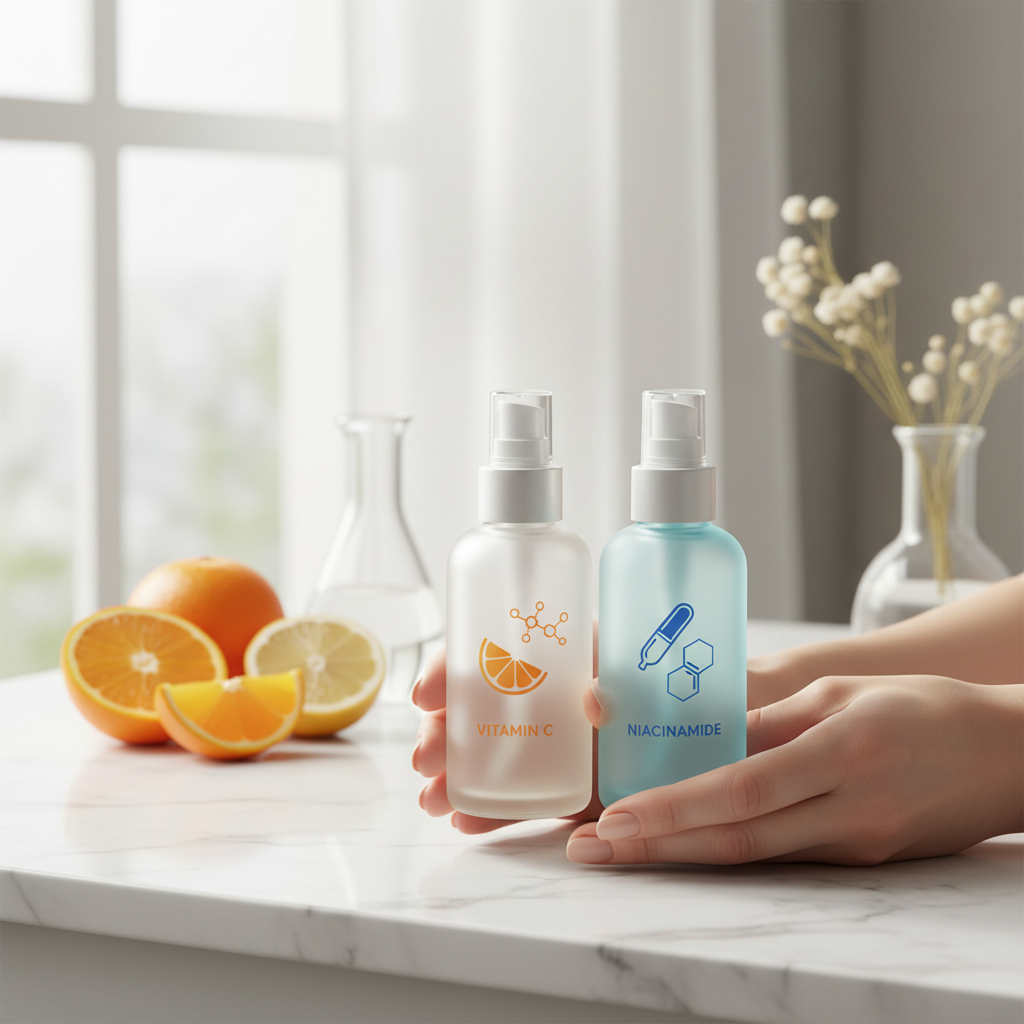
This guide helps you understand if niacinamide or vitamin C is better for your skin. With easy steps and expert advice, you’ll learn their benefits, how to use them, and how to choose what works best for you. Perfect for grade 9 level and beginners in skincare.
Understanding Niacinamide and Vitamin C for Skincare
What Is Niacinamide and How Does It Work?
Niacinamide is a form of vitamin B3. It helps build proteins in the skin and locks in moisture. Niacinamide can reduce redness, fight acne, and make your skin softer. It calms skin and keeps it healthy.
What Is Vitamin C and How Does It Work?
Vitamin C is an antioxidant that protects your skin from damage. It brightens your skin, evens out skin tone, and boosts collagen. Vitamin C fights pollution and UV damage, making your skin look fresh and strong.
Comparing Benefits: Niacinamide vs Vitamin C
Skin Brightening Effects
- Niacinamide: Helps lighten dark spots and gives the skin a glowing look.
- Vitamin C: Is famous for brightening skin and making it look radiant.
Anti-Aging Properties
- Niacinamide: Reduces wrinkles and fine lines by boosting elasticity.
- Vitamin C: Increases collagen, helping skin stay firm and smooth.
Reducing Hyperpigmentation
- Niacinamide: Fades areas of uneven color gently, ideal for sensitive skin.
- Vitamin C: Works quickly to lighten dark spots for a clearer complexion.
Supporting Skin Barrier Health
- Niacinamide: Strengthens the skin’s barrier and helps lock in moisture.
- Vitamin C: Protects skin from environmental damage but does not directly repair the barrier.
How to Choose Between Niacinamide and Vitamin C
Skin Type Considerations
- Oily Skin: Niacinamide helps control oil and reduces pores.
- Dry Skin: Both ingredients boost moisture, but niacinamide is gentler.
- Sensitive Skin: Niacinamide is less likely to cause irritation.
- Combination Skin: You can use both but start slow.
Addressing Specific Skin Concerns
- Acne: Niacinamide can lower breakouts and redness.
- Dark Spots: Vitamin C works fast on pigmentation, niacinamide is steady and gentle.
- Dullness: Both boost brightness and freshness.
Sensitivity and Side Effects
- Niacinamide: Rarely causes irritation but may tingle if overused.
- Vitamin C: Might sting, especially on sensitive or damaged skin.
- Always patch test before full use.
How to Use Niacinamide and Vitamin C in Your Routine
Application Order and Frequency
| Step | Product | Frequency |
|---|---|---|
| 1 | Cleanser | Daily |
| 2 | Toner | Daily |
| 3 | Vitamin C Serum | Morning (3-5 times/week) |
| 4 | Niacinamide Serum | Morning or night (daily) |
| 5 | Moisturizer | Daily |
| 6 | Sunscreen | Morning (daily) |
Combining Niacinamide and Vitamin C Safely
- Apply vitamin C first, then niacinamide after 10 minutes.
- Use one in the morning and the other at night if your skin is sensitive.
- Avoid mixing them in one layer unless the product is specially made.
Recommended Products (2026)
- Niacinamide Serum: The Ordinary Niacinamide 10% + Zinc 1%
- Vitamin C: SkinCeuticals C E Ferulic
- Combo Products: Paula’s Choice Advanced Brightening
- Always check the latest formula updates and choose reputable brands.
Expert Tips and FAQs: Niacinamide vs Vitamin C
Can You Use Niacinamide and Vitamin C Together?
Yes, you can use them together. Apply vitamin C first, wait for it to absorb, then use niacinamide. If you have sensitive skin, space them out morning and evening.
Common Mistakes to Avoid
- Using too much product at once.
- Skipping patch tests.
- Mixing unknown formulas.
- Not using sunscreen—especially with vitamin C.
Answers to 2026’s Most Googled Questions
- Can niacinamide and vitamin C cause breakouts? Rarely, but overuse or incorrect layering may irritate skin.
- Which ingredient is best for teens? Niacinamide is gentler for young skin.
- How long until results show? Most people see changes in 4-8 weeks.
References and Latest Research (2026)
- Journal of Dermatology (2025): Studies on safe usage of niacinamide and vitamin C.
- American Academy of Dermatology: Updated guidelines for skin brightening.
- Clinical trials comparing niacinamide and vitamin C for hyperpigmentation.
Summary: Key Points and Next Steps
- Both niacinamide and vitamin C brighten and protect skin.
- Choose based on skin type and specific concerns.
- Use sunscreen daily to enhance results.
- Review product labels and start slow.
- Keep learning with new research and expert recommendations.
Preparation: Tools and Materials You Need
- Gentle face cleanser
- Niacinamide serum
- Vitamin C serum
- Light moisturizer
- Sunscreen (SPF 30+)
- Cotton pads and clean towels
Step-by-Step Tutorial: Applying Niacinamide and Vitamin C
- Wash your face with a gentle cleanser and pat dry.
- Apply toner if you use one. Wait until skin absorbs.
- Put on vitamin C serum in the morning. Let it sink in for 10 minutes.
- Apply niacinamide serum after vitamin C or at night.
- Use moisturizer to help lock in all the goodness.
- Finish with sunscreen in the morning.
Common Problems and Solutions
- Redness: Try using the products on alternate days.
- Stinging: Patch test first, then lower use until your skin adapts.
- No improvement: Check if you are using expired products or not enough sunscreen.
Advanced Tips: Optimizing Your Skincare Routine
- Store vitamin C in a cool, dark place to maintain effectiveness.
- Layer lightweight formulas first, then heavier creams.
- Speak with a dermatologist about mixing actives safely.
- Adjust frequency based on seasons or skin changes.