Understanding Sunscreen Basics: Mineral vs Chemical Explained
What Is Mineral Sunscreen?
Mineral sunscreen is also known as physical sunscreen. It contains natural minerals like zinc oxide or titanium dioxide. These minerals sit on top of your skin and act as a shield, blocking UV rays.
- Common mineral sunscreen ingredients: Zinc oxide, Titanium dioxide
- Often called “natural” sunscreen
- Suitable for sensitive skin
What Is Chemical Sunscreen?
Chemical sunscreen uses ingredients that absorb UV rays and turn them into heat, which is then released from the skin. It often feels lighter and blends more easily.
- Common chemical sunscreen ingredients: Avobenzone, Octinoxate, Oxybenzone
- Usually clear and leaves minimal residue
- Good for everyday wear on most skin types
How Each Sunscreen Type Works
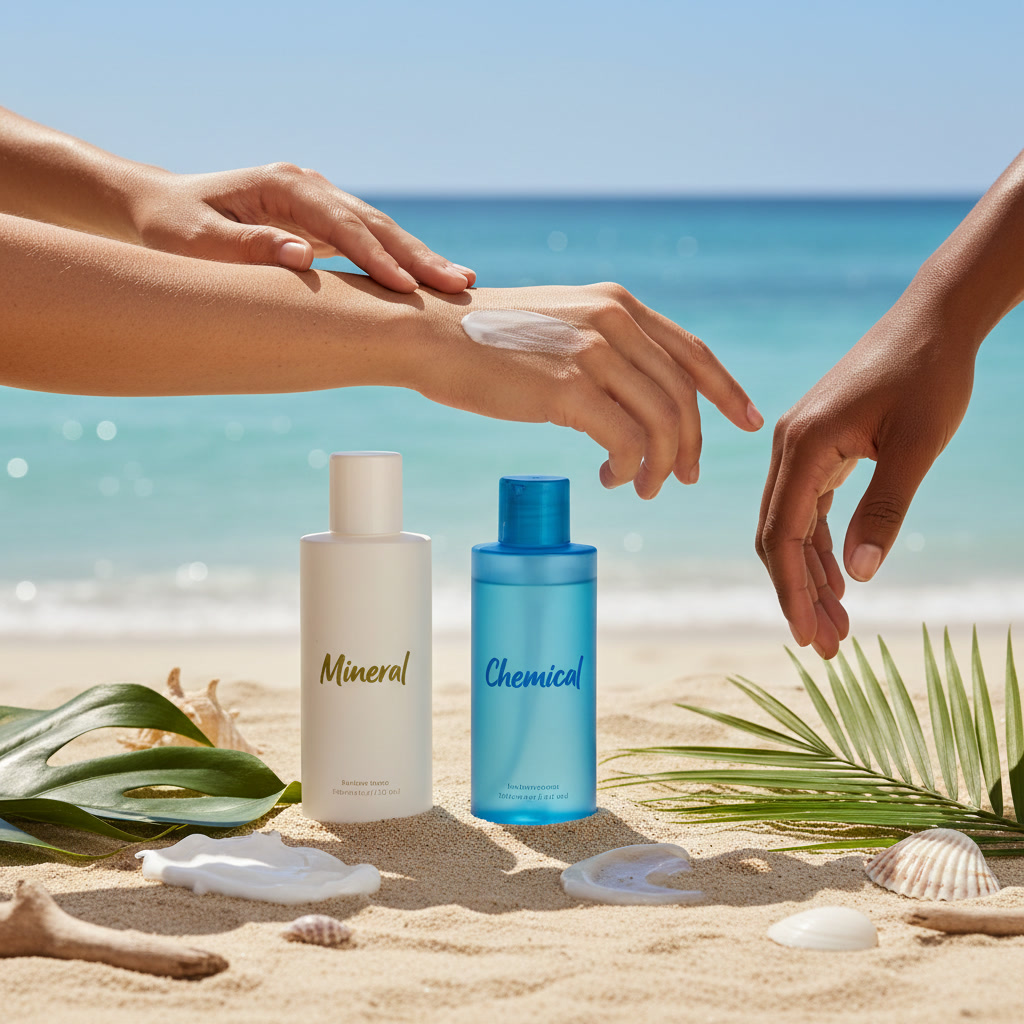
Mineral sunscreen reflects and scatters UVA and UVB rays. Chemical sunscreen absorbs UV rays, converting them into harmless energy. Both protect your skin, but work differently.
| Type | How It Works |
|---|---|
| Mineral | Reflects/scatters UV rays |
| Chemical | Absorbs UV rays; converts them to heat |
Comparing Mineral and Chemical Sunscreens: Effectiveness and Protection
UV Protection: Mineral vs Chemical Sunscreen Efficacy
Mineral sunscreens protect against both UVA and UVB rays. Chemical sunscreens can also protect against both, but you need to check the label for “broad spectrum” coverage.
- Mineral: Offers instant protection after application
- Chemical: Needs about 15 minutes to start working
- SPF rating is important for both types
Application and Wearability Differences
Mineral sunscreens may leave a white cast, especially on darker skin tones. Chemical sunscreens are usually clear and lightweight, making them popular for everyday use.
- Mineral: Thicker, may feel heavy
- Chemical: Lighter, easily absorbed
Water and Sweat Resistance Compared
Both types can offer water-resistant formulas, but chemical sunscreens often last longer during swimming or sweating. Always reapply after water activities.
- Mineral: May wash off more easily
- Chemical: Often more durable in water
Skin Sensitivity and Suitability: Which Sunscreen Is Best for Your Skin Type?
Mineral Sunscreen for Sensitive and Acne-Prone Skin
Mineral sunscreen is less likely to irritate. It is great for sensitive or acne-prone skin because it sits on the surface and doesn’t clog pores.
- Non-comedogenic
- Good for eczema and rosacea
Chemical Sunscreen for Darker Skin Tones and Everyday Use
Chemical sunscreen blends easily into the skin. It works well for people with darker skin, as it doesn’t leave a visible residue.
- Good for everyday use
- Preferred for makeup wearers
Safety and Environmental Impact: What You Need to Know in 2026
Ingredient Safety and Recent Research Findings
Research shows some chemical ingredients may cause irritation or allergic reactions. Mineral sunscreens are generally considered safe, especially for children.
- Mineral: Fewer allergic reactions
- Chemical: Some ingredients may be absorbed into the body
Reef-Safe Sunscreens and Environmental Concerns
Many places have banned sunscreens with certain chemical ingredients to protect coral reefs. Mineral sunscreens are often labeled “reef-safe.”
- Mineral: Safe for reefs and marine life
- Chemical: Check for “reef-safe” label
How to Choose Between Mineral and Chemical Sunscreen for Your Routine
Key Factors in Making Your Sunscreen Choice
- Skin Type: Sensitive skin? Choose mineral.
- Outdoor Activities: Swimmers may prefer chemical, but reapply often.
- Environmental Concerns: Mineral is safer for the environment.
- Cosmetic Preference: Chemical blends smoothly, good under makeup.
Tips for Effective Application and Reapplication
- Apply sunscreen 15-30 minutes before going outside.
- Use enough: about a shot glass for your body.
- Reapply every two hours, especially after swimming or sweating.
- Don’t forget ears, neck, and tops of feet!
Recommended Products (With 2026 Updates)
- Mineral: Look for SPF 30+ with zinc oxide or titanium dioxide.
- Chemical: Look for “broad spectrum,” water resistance, and SPF 30+
- Check for 2026 updates on ingredients for extra safety.
FAQ: Common Questions About Mineral vs Chemical Sunscreen in 2026
- Q: Can mineral sunscreen stain clothes?
A: Some formulas may, but newer products stain less. - Q: Is chemical sunscreen safe for children?
A: Mineral is usually safer and recommended for kids. - Q: How can I remove sunscreen residue?
A: Use mild cleansers and moisturize after washing. - Q: What does “reef-safe” mean?
A: It means the sunscreen does not harm coral reefs or marine life. - Q: Can I use sunscreen with other skincare products?
A: Yes, apply sunscreen as the last step in your skincare routine.
Preparation: What You Need Before Starting
- Sunscreen (mineral or chemical)
- Clean skin
- Mirror for application
- Towel (for reapplication after water activities)
Step-by-Step Tutorial: How to Apply Sunscreen
Step 1: Choose the Right Sunscreen
Pick a sunscreen based on your skin type, activities, and environmental concerns.
Step 2: Prepare Your Skin
Wash and dry your skin so sunscreen sticks properly.
Step 3: Apply the Sunscreen
- Use the recommended amount (about a shot glass for body, nickel-sized amount for face).
- Dot sunscreen on cheeks, forehead, nose, and chin, then spread evenly.
- Apply to all exposed areas—ears, neck, and feet.
Step 4: Wait and Reapply
Chemical sunscreen needs 15-20 minutes to activate. Mineral works instantly. Reapply every two hours or after swimming/sweating.
Common Problems and Solutions
- White Cast: Try tinted mineral sunscreens to blend better.
- Irritation: Switch to mineral sunscreen or hypoallergenic chemical formulas.
- Forgetting Reapplication: Set a phone reminder for every two hours.
Advanced Tips for Sunscreen Use
- Layer sunscreen with moisturizer for extra hydration.
- Use spray or stick sunscreens for quick touch-ups.
- Check for expiration dates before use.
- Try sunscreen powders for easy reapplication over makeup.
Conclusion: Key Takeaways and Next Steps
Mineral and chemical sunscreens both offer good UV protection. Choose based on your skin type, activity, and environmental preferences. Always use broad-spectrum SPF 30+ and reapply regularly. Explore new products in 2026 for better safety and wearability. Start your daily sunscreen routine for lifelong skin health!