Why the Best Skincare Routine Matters for Beginners
Starting a skincare routine can feel confusing, but following the best skincare routine for beginners can keep your skin healthy and looking its best. A simple routine helps prevent acne, dryness, sun damage, and early signs of aging. For beginners, learning these basics avoids common mistakes and builds habits for lifelong skin health.
Essential Skincare Products for Beginners
Cleanser – Starting Your Routine Right
A gentle cleanser removes dirt, oil, and makeup from your skin. Cleansing your face every morning and night is the first step in any skincare routine. Choose a cleanser suited for your skin type, like foaming for oily skin or creamy for dry skin.
Moisturizer – Locks in Hydration
Moisturizer helps keep your skin soft and prevents dryness. Even oily skin needs moisture. Pick a lightweight, non-greasy option for oily skin, or a richer cream for dry skin. Apply after cleansing to lock in hydration.
Sunscreen – Daily Protection Essentials
Sunscreen protects your skin from harmful UV rays that can cause sunburn and speed up aging. Apply sunscreen every morning, even on cloudy days. Look for broad-spectrum SPF 30 or higher for the best protection for beginners.
Step-by-Step Skincare Routine for Beginners
Morning Skincare Routine Steps
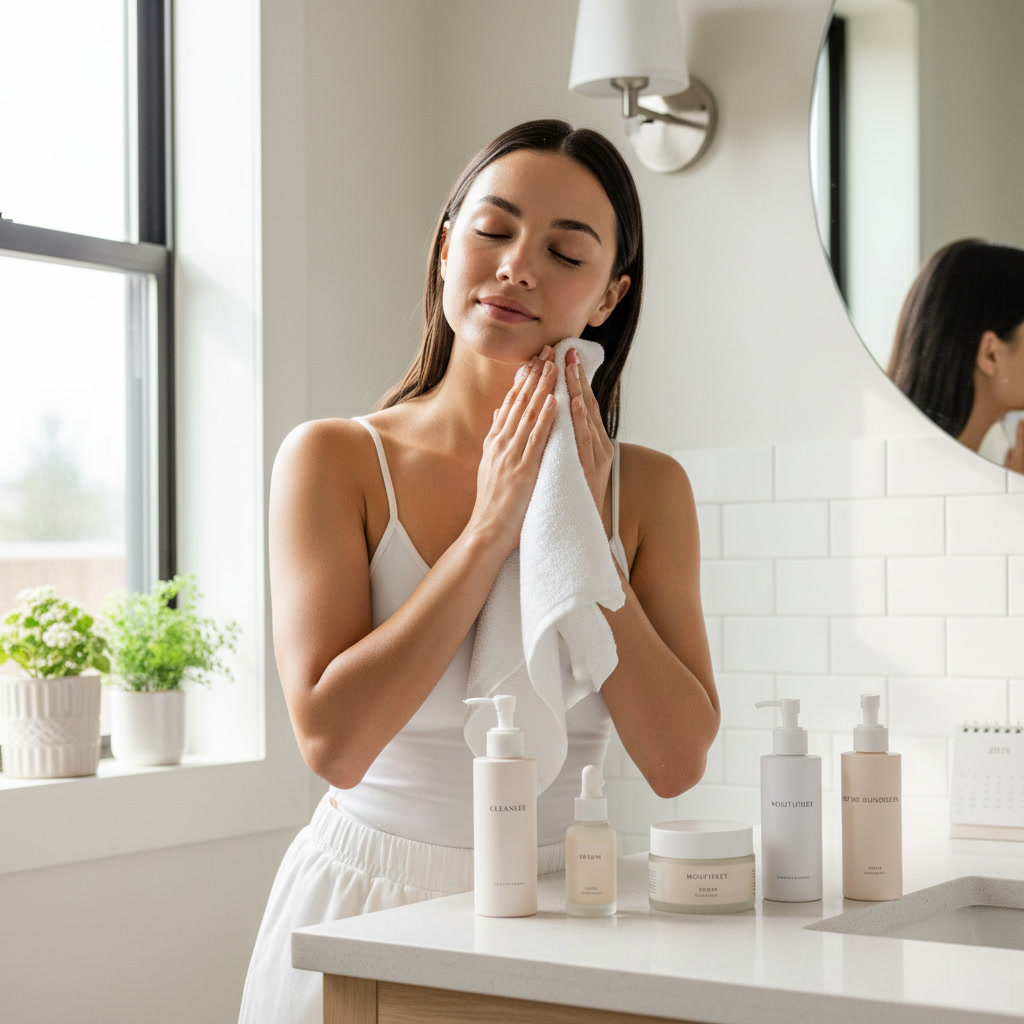
- Cleanse: Wash your face with a gentle cleanser to remove overnight oil and sweat.
- Moisturize: Apply a small amount of moisturizer to damp skin to help it absorb better.
- Sunscreen: Finish with a generous layer of sunscreen (SPF 30+) for daily protection.
Night Skincare Routine Steps
- Cleanse: Remove makeup and clean your face with your cleanser.
- Moisturize: Apply moisturizer to help your skin repair itself overnight.
Choosing the Best Skincare Products for Your Skin Type
Identifying Your Skin Type
- Oily Skin: Shiny, especially in the T-zone (forehead, nose, chin).
- Dry Skin: Feels tight, rough, or flaky.
- Combination Skin: Oily in some areas, dry in others.
- Sensitive Skin: Easily irritated or red.
- Normal Skin: Comfortable and balanced, not too oily or dry.
Matching Products to Skin Needs
Choose products made for your skin type. For oily or acne-prone skin, look for “oil-free” or “non-comedogenic” labels. Dry skin benefits from richer creams and gentle cleansers. Sensitive skin should use fragrance-free, simple formulas.
Common Mistakes Beginners Make in Their Skincare Routine
- Using harsh products that cause dryness or irritation.
- Skipping sunscreen, even indoors or when it’s cloudy.
- Trying too many new products at once.
- Not removing makeup properly at night.
- Over-exfoliating or scrubbing the skin too hard.
Tips to Build and Maintain the Best Skincare Routine
- Be consistent. Stick to your routine every day for best results.
- Introduce new products one at a time to watch for reactions.
- Use lukewarm water, not hot, to avoid drying out your skin.
- Keep your routine simple; more is not always better.
- Store skincare products in a cool, dry place out of direct sunlight.
FAQ: Best Skincare Routine for Beginners in 2026
| Question | Answer |
|---|---|
| Do I need to use toner and serum as a beginner? | No, start with cleanser, moisturizer, and sunscreen. Add toner and serum later if needed. |
| How long does it take to see results from a skincare routine? | Usually 4-8 weeks. Be patient and don’t give up quickly. |
| What if I have acne? | Use non-comedogenic products and stick to the basics. See a dermatologist if acne is severe. |
| Should I exfoliate my skin? | Exfoliate only 1-2 times a week with a gentle scrub or chemical exfoliant, once you are comfortable with basic steps. |
| Can I skip moisturizer if I have oily skin? | No, even oily skin needs moisture. Use a lightweight, oil-free moisturizer. |
Summary: Key Points and Next Steps
Following the best skincare routine for beginners helps you achieve clean, healthy skin. Remember to start simple—cleanser, moisturizer, and sunscreen are your basics. Pick products suited for your skin type, avoid common mistakes, and be consistent. Once comfortable, slowly add more steps if needed. Take time to observe how your skin reacts and adjust as necessary. For further improvements, consult a dermatologist to personalize your routine.